

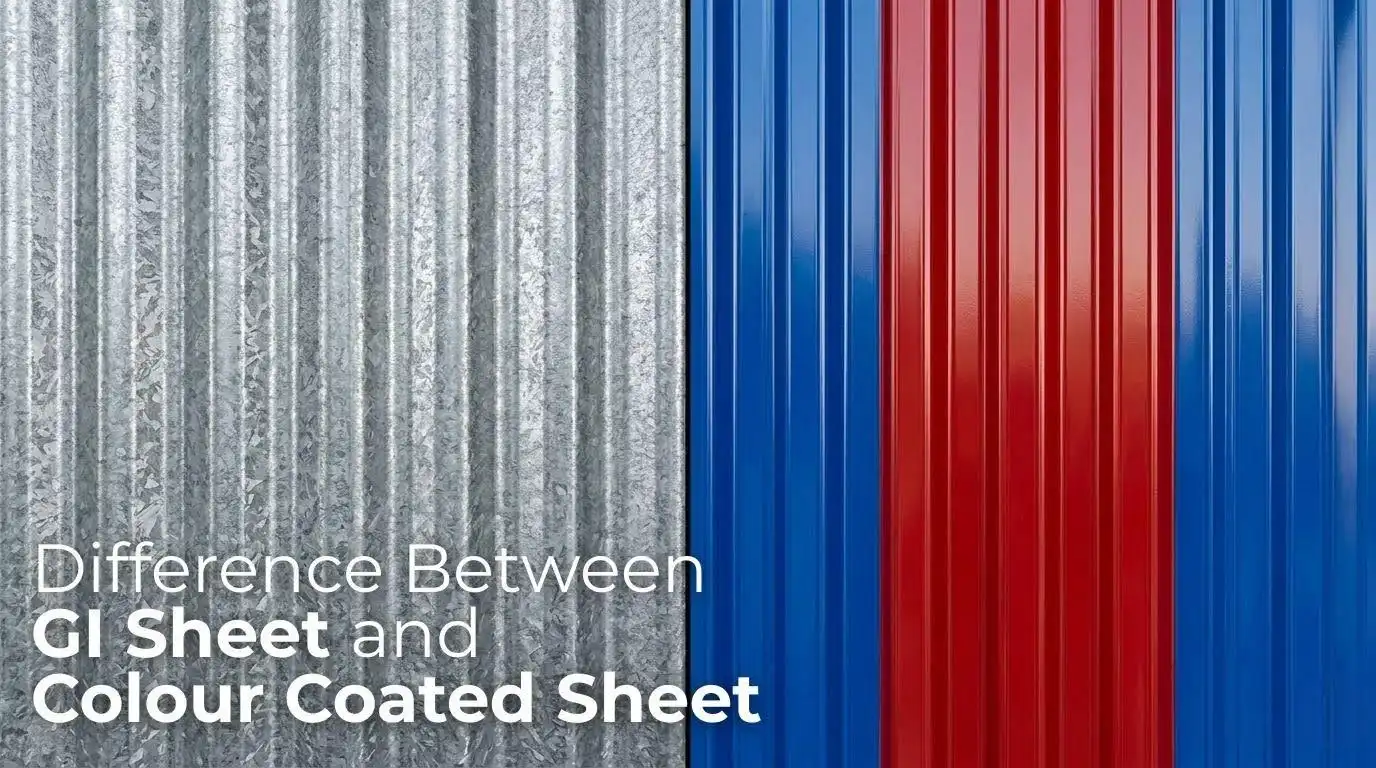
Roofing is no longer just about covering a structure. Roofing materials are expected to deliver durability and weather protection with long-term value. Among the most widely used roofing sheets in modern construction two of the most popular metal sheets are the traditional Galvanized Iron (GI) sheet and the increasingly preferred colour coated sheet.
Understanding the difference between GI sheet and colour coated sheet in India enables property owners and engineers as well as contractors to choose materials that align with environmental conditions, even the performance expectations.
WIth this guide you will explore the key differences between the GI Sheet and colour coated sheet so that you can make the right decision.
What is a Colour Coated Sheet?
It is technologically an enhanced roofing material designed to combine structural strength with long-lasting surface protection. Built on a galvanized or galvalume steel base, it is finished with multiple protective coating layers that improve durability and lifespan also aesthetics.
Colour Coated Sheet Properties
The strength of colour roofing sheets lies in their engineered surface layers. These sheets are developed to perform under continuous environmental exposure without compromising visual appeal.
Key colour coated sheet properties include:
- High resistance to corrosion and oxidation
- Excellent UV stability and colour retention
- Smooth, uniform surface finish
- Improved heat reflectivity
- Lightweight yet structurally reliable composition
These properties make colour coated roofing sheets suitable for industrial facilities and commercial buildings as well as residential projects where both performance and aesthetics matter.
Learn more about the benefits of colour roofing sheets.
What are the Properties of Galvanized Iron Sheets?
Galvanized Iron sheets remain widely used due to their structural reliability and economical pricing. They are produced by coating steel with zinc through a hot-dip galvanization process.
Properties of Galvanized Iron Sheet
The zinc layer serves as a protective barrier against rust and environmental exposure. However, the protection depends entirely on the condition of the zinc coating.
The primary properties of Galvanized iron sheet include:
- Moderate corrosion resistance through zinc protection
- High tensile strength for structural applications
- Cost-effective initial investment
- Plain metallic surface finish
- Suitable for temporary or low-exposure structures
Prolonged exposure to humidity and industrial pollutants or coastal salt air may gradually reduce their protective layer while GI sheets perform reliably in moderate climates.
Difference Between GI Sheet and Colour Coated Sheet in India
Understanding the difference between GI sheet and colour coated sheet in India becomes essential for long-term planning when comparing roofing material. Regional climate variations significantly influence material performance.
A direct comparison clarifies the functional and technical differences between these materials.
| Feature | GI Sheet | Colour Coated Sheet |
|---|---|---|
| Base Material | Steel with zinc coating | Galvanized/Galvalume steel with paint layers |
| Surface Finish | Metallic, plain | Smooth, coloured finish |
| Corrosion Protection | Zinc layer only | Zinc + primer + top coating |
| Lifespan | 10–15 years | 15–25 years |
| Maintenance | May require repainting | Minimal maintenance |
| Aesthetic Appeal | Limited | Wide colour options |
| Weather Resistance | Moderate | High |
| Energy Efficiency | Basic | Improved heat reflectivity |
| Cost | Lower upfront cost | Higher upfront, better lifecycle value |
This table highlights how performance differences extend beyond appearance and into long-term structural reliability.
Importance of Choosing the Right Sheet
Choosing the right roofing sheet is not a minor technical decision but it directly affects how a building performs over time. If the sheet is not suited to the local climate or structural requirement, problems like corrosion and leakage or even rising maintenance costs can follow.
Several factors clearly demonstrate the importance of choosing the right sheet:
- Climate suitability: Regions with high humidity or coastal exposure require stronger corrosion resistance.
- Structural strength: Sheets must withstand wind loads, thermal expansion, and environmental stress.
- Lifecycle value: Longer durability reduces replacement frequency and associated costs.
- Regulatory compliance: Proper selection ensures adherence to safety and construction standards.
When comparing options like GI sheets and a colour coated sheet, the focus should extend beyond upfront pricing. A slightly higher initial investment can often result in significantly lower long-term expenses and fewer operational disruptions. Roofing materials influence structural integrity, energy performance, and even resale value.
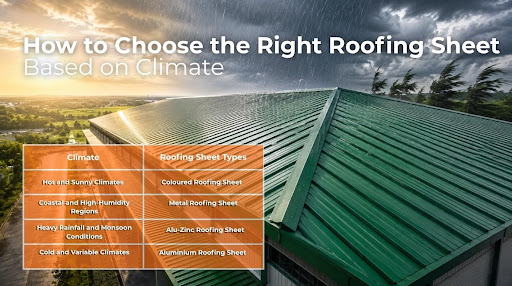
How to Choose the Right Roofing Sheet?
Selecting the right roofing sheet requires a clear understanding of project demands and environmental exposure. Every structure has unique performance requirements, and the roofing material must align with those expectations. Careful evaluation at the planning stage prevents costly corrections later.
The following considerations help guide the decision-making process:
- Evaluate environmental impact: Analyze humidity levels, rainfall intensity, and temperature variation.
- Compare coating specifications: Review zinc coating weight and paint layer thickness.
- Consider durability expectations: Assess the required lifespan and acceptable maintenance intervals.
- Review lifecycle cost: Look beyond initial pricing and calculate long-term value.
- Verify manufacturer standards: Ensure quality certifications and warranty coverage are available.
A structured approach ensures the selected roofing sheet delivers durability, efficiency, and dependable performance for years to come.
Learn more about how to choose the right roofing sheet.
Conclusion
Both GI sheets and colour coated sheet options continue to serve important roles in construction. But when evaluating durability, weather resistance, energy efficiency, and long-term maintenance, colour coated roofing sheets offer measurable advantages under modern construction conditions.
Understanding the difference between GI sheet and colour coated sheet in India enables smarter, performance-driven roofing decisions aligned with environmental and structural requirements.
Written and Verified by:

SEL Tiger
Bio: SEL Tiger Roofing Sheets manufactures roofing sheets using advanced technology for industrial, commercial and domestic requirements. SEL Tiger Roofing Sheets supplies colour coated and Alu-Zinc coated sheets that offer superior strength, weather resistance, corrosion resistance and long-lasting value for every project.