

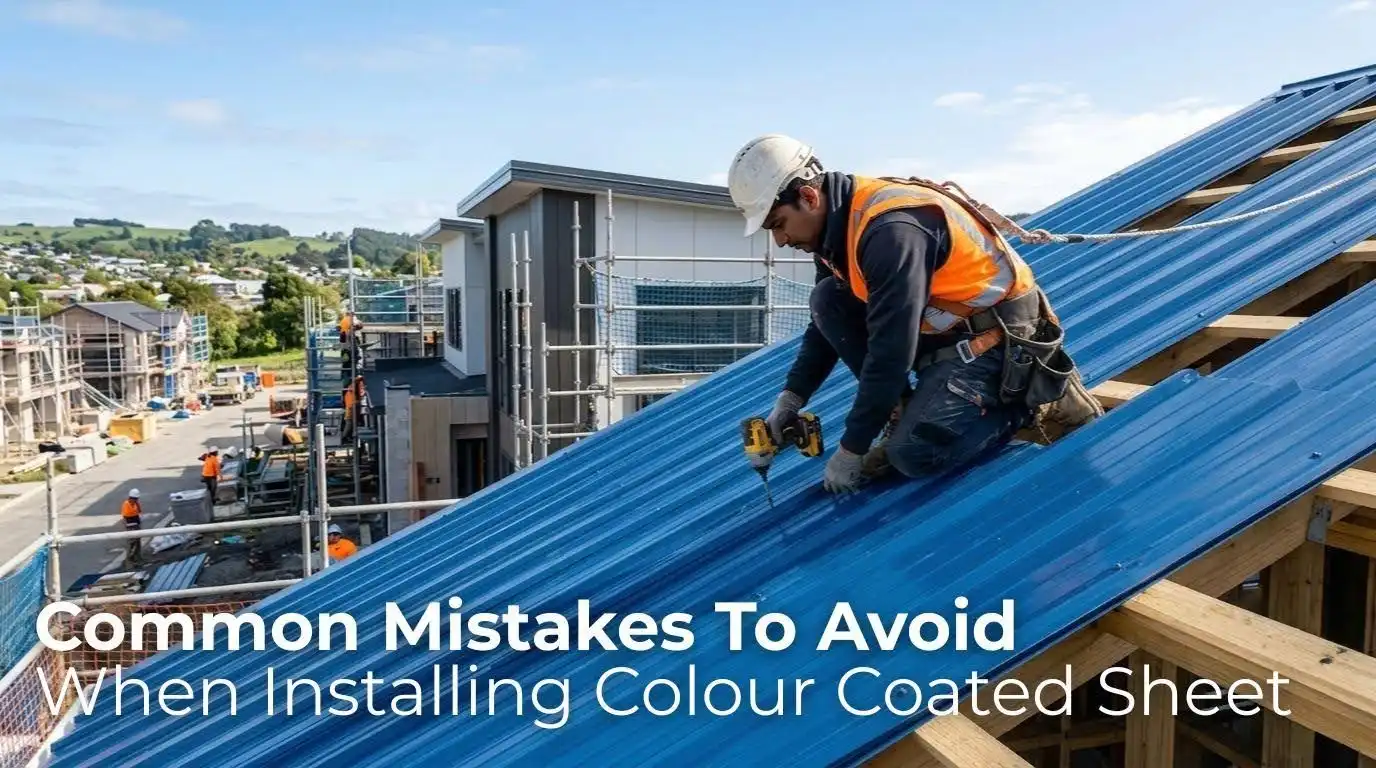
The effectiveness of a roofing system is determined not only by the quality of materials used but also by the precision of its installation. Even the most durable colour coated roofing sheets may fail to deliver expected performance if installed incorrectly. Installation errors can lead to issues like water leakage, premature corrosion, reduced lifespan, and increased maintenance requirements.
A well-installed roof ensures long-term protection, while avoidable mistakes can compromise both structural integrity and overall efficiency. Understanding common roofing sheet installation mistakes allows property owners and contractors to take preventive measures.
What Mistakes Should Be Avoided When Installing Coloured Roofing Sheets?
Recognizing and avoiding common installation errors helps preserve strength, durability, advantages and prevent rust on colour sheets.
-
Improper Roof Slope Installation
One of the most frequently observed roofing sheet installation mistakes is incorrect slope design. A roof that lacks the appropriate slope does not allow water to drain efficiently, leading to water accumulation on the surface. Over time, this can result in leakage, corrosion, and increased structural stress.
Improper roof slope installation also encourages the buildup of dirt and debris, which further obstructs drainage. Roofing sheets should be installed at an angle that supports smooth water flow, particularly in areas that experience heavy rainfall. Ensuring the correct slope is fundamental to maintaining both performance and durability. -
Roofing Sheet Overlap Mistakes
Incorrect overlapping is another important issue that affects the effectiveness of a roofing system. Roofing sheet overlap mistakes can create small gaps or misaligned joints which allow water to penetrate beneath the sheets. Proper overlap ensures that water flows over the joints instead of entering them. The required overlap length depends on factors such as roof slope, sheet profile, corrugated profile and environmental conditions.
-
Using Incorrect Fasteners and Fixing Techniques
Fasteners play a vital role in securing roofing sheets and maintaining structural stability. Using unsuitable or low-quality fasteners can result in loosening and leakage as well as reduced durability. It is important to select fasteners that are compatible with colour coated roofing sheets and to follow recommended installation practices.
-
Ignoring Thermal Expansion and Contraction
Metal roofing sheets naturally expand and contract with changes in temperature. Overlooking this factor is a common roofing sheet installation mistake that can lead to deformation, cracking, or loosening of fasteners. Proper installation should allow for controlled movement to accommodate thermal changes. This helps prevent unnecessary stress on joints and ensures that the roofing system maintains its integrity over time.
-
Damaging the Protective Coating During Installation
The protective coating on coloured roofing sheets is essential for preventing corrosion and maintaining durability. Rough handling, improper cutting methods, or the use of unsuitable tools can damage this coating. Even minor surface damage can expose the base metal which makes it vulnerable to rust and environmental wear. Careful handling, proper storage, and the use of appropriate tools are necessary to preserve the coating.
-
Poor Alignment and Inaccurate Installation
Improper alignment of roofing sheets can lead to uneven surfaces, gaps, and reduced structural stability. Misaligned sheets may not overlap correctly, increasing the likelihood of leakage and water infiltration.
Accurate measurement and careful positioning during installation ensure that sheets fit together seamlessly. Proper alignment not only improves functionality but also enhances the overall appearance of the roof, contributing to a clean and consistent finish.
Roofing Sheet Installation Tips
Following established best practices ensures that roofing sheets deliver optimal performance and durability. To achieve effective installation, consider the following roofing sheet installation tips:
- Ensure accurate measurement and maintain the correct roof slope
- Use recommended fasteners and appropriate fixing techniques
- Maintain proper sheet overlap based on design requirements
- Handle sheets carefully to avoid damage to the protective coating
- Conduct inspections throughout the installation process
Adhering to these practices helps improve installation quality and ensures that colour coated roofing sheets perform efficiently over time.
Conclusion
The successful performance of a roofing system depends significantly on how well it is installed. While colour coated roofing sheets are designed to provide durability and resistance, their effectiveness is closely linked to proper installation practices.
Avoiding common roofing sheet installation mistakes, such as incorrect slope, improper overlap, and poor fastening techniques, can greatly enhance the lifespan and reliability of the roof. By following recommended installation methods and maintaining attention to detail, property owners and contractors can ensure that their roofing systems remain efficient, durable, and structurally sound for years to come.
Written and Verified by:

SEL Tiger
Bio: SEL Tiger Roofing Sheets manufactures roofing sheets using advanced technology for industrial, commercial and domestic requirements. SEL Tiger Roofing Sheets supplies colour coated and Alu-Zinc coated sheets that offer superior strength, weather resistance, corrosion resistance and long-lasting value for every project.