

Construction and roofing materials are expected to deliver much more than basic structural protection. Modern buildings now require materials that can withstand changing climate conditions, resist corrosion for longer periods and reduce long-term maintenance costs. Durability has become one of the most important factors influencing material selection.
This is one of the main reasons why the demand for colour coated coil products continues to grow across the roofing and construction industry. Their advanced coating structure helps them perform more effectively in environments exposed to moisture, pollution, heat and heavy rainfall.
In this article, you will understand why colour coated coils generally last longer than GI coils and how differences in manufacturing.
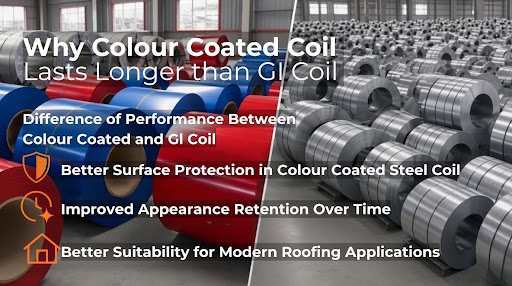
Difference of Performance Between Colour Coated and GI Coil
Although both materials are widely used in roofing and cladding applications, their long-term performance differs considerably when exposed to real environmental conditions.
-
Better Surface Protection in Colour Coated Steel Coil
One of the biggest reasons colour coated steel coil products last longer is because of their additional protective coating system. Colour coated materials are protected by both metallic coatings and specially manufactured paint layers that shield the surface from moisture, UV rays and pollutants. These protective coatings reduce direct contact between the environment and the metal surface, slowing down oxidation and corrosion significantly.
-
Improved Appearance Retention Over Time
Traditional GI coils often begin losing surface shine and appearance after prolonged exposure to sunlight, humidity and rain. In contrast, colour coated products are designed to maintain their finish, colour consistency and visual quality for longer durations.
This makes them particularly suitable for projects where both durability and aesthetics matter.
-
Better Suitability for Modern Roofing Applications
Today, many contractors and architects consider colour coated coil for roofing one of the most reliable solutions because it combines durability, weather resistance and visual appeal within a single material.
Compared to GI coils, colour coated products generally offer better:
- Corrosion protection
- Heat resistance
- Surface durability
- Colour retention
- Maintenance efficiency
This combination of performance benefits is why they are increasingly recognised as one of the best coils for roofing applications across industrial, commercial and residential sectors.
Manufacturing Processes and Structures
The manufacturing process directly affects how effectively a coil can resist environmental exposure and maintain durability over time.
-
Advanced Multi-Layer Coating Technology
The manufacturing process of prepainted steel coils involves multiple stages of protective treatment designed to improve long-term performance.
After the metallic coating process, the steel surface undergoes chemical treatment, primer application and final top-coat painting. This layered protection system creates a much stronger barrier against environmental damage compared to traditional galvanized materials.
-
Simpler Protective Structure in GI Coil
A standard GI coil mainly depends on zinc coating for protection against rust and corrosion. While zinc provides reasonable protection initially, prolonged exposure to moisture, industrial pollutants and changing weather conditions can gradually weaken the protective layer.
Without additional paint coatings, the surface remains more vulnerable to fading, oxidation and environmental wear over time.
Comparison of Corrosion Resistance and Harsh Environment Performance
Corrosion resistance remains one of the most important factors affecting roofing lifespan, particularly in areas exposed to heavy rainfall, humidity and industrial pollution.
-
Better Corrosion Resistance in Colour Coated Coil
One of the biggest advantages highlighted in the comparison of corrosion resistance is that colour coated products create a stronger barrier against moisture and oxygen exposure.
Their additional coating layers significantly reduce the risk of rust formation. The extra surface protection helps improve durability while reducing the chances of early material deterioration.
-
Stronger Performance in Harsh Environments
When evaluating performance in harsh environments, colour coated coils generally outperform GI materials because they resist fading, peeling and corrosion more effectively over long periods.
The advanced coating system used in colour coated products helps minimise these effects, allowing the material to maintain performance and appearance for a longer time.
Conclusion
Long-term durability and environmental resistance have become essential considerations in roofing material selection. While both GI coil and colour coated coils continue to be widely used in construction projects, colour coated products clearly offer stronger protection against corrosion, moisture, UV exposure and surface deterioration.
This is why colour coated materials are increasingly recognised as the best coil for roofing applications across industrial, commercial and residential developments. For builders, architects and property owners focused on long-term value, investing in high-quality colour coated coils is not only a design preference but also a practical solution for achieving stronger performance, lower maintenance and improved lifecycle efficiency.
Learn more – Difference Between GI Sheet and Colour Coated Sheet
Written and Verified by:

SEL Tiger
Bio: SEL Tiger Roofing Sheets manufactures roofing sheets using advanced technology for industrial, commercial and domestic requirements. SEL Tiger Roofing Sheets supplies colour coated and Alu-Zinc coated sheets that offer superior strength, weather resistance, corrosion resistance and long-lasting value for every project.