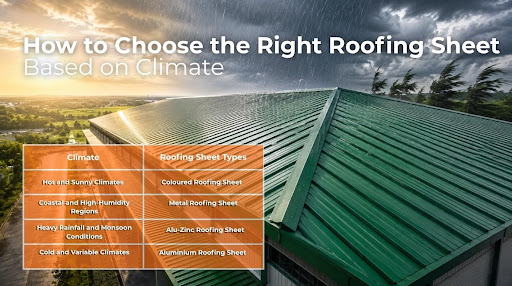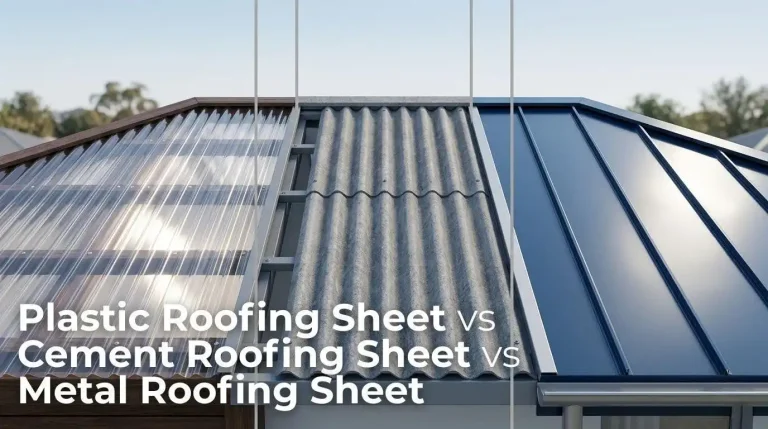


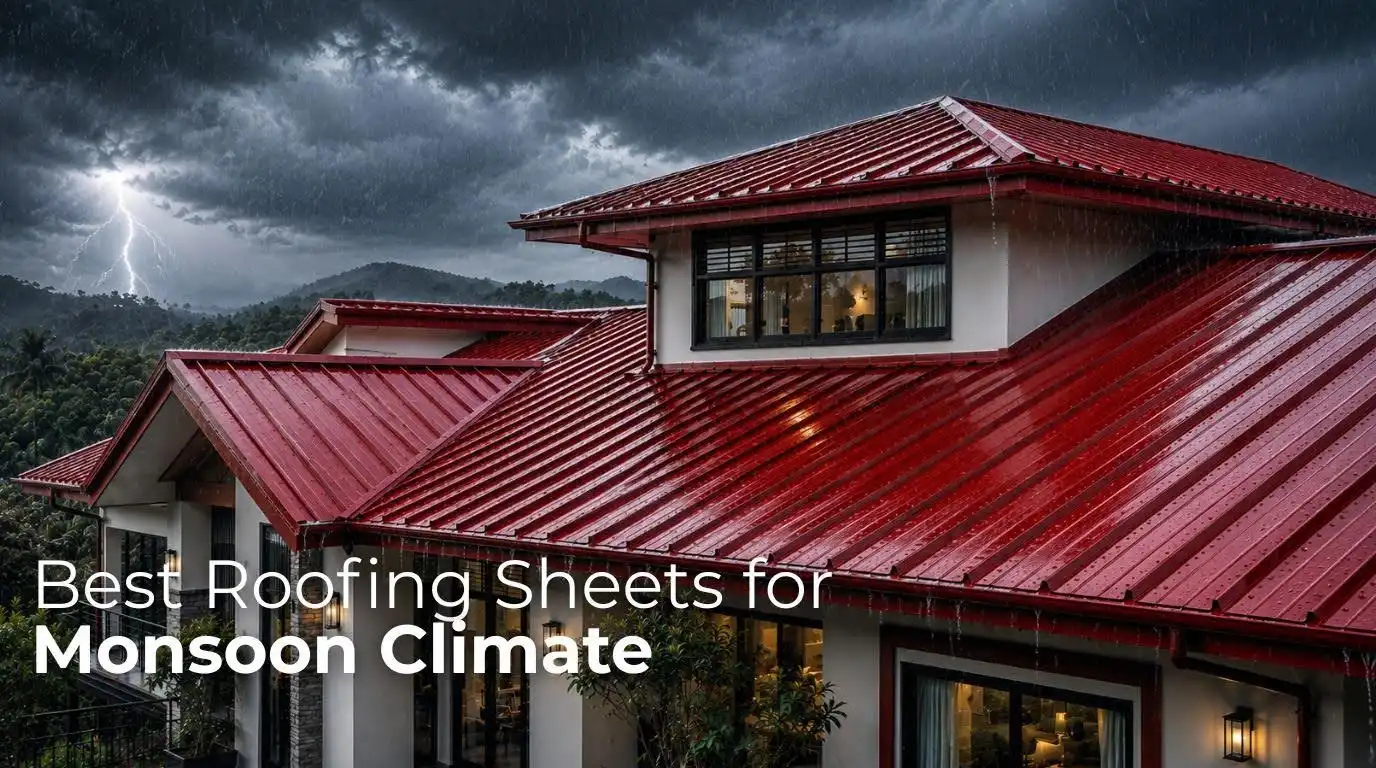
Roofing systems are put under the greatest strain during the monsoon season due to continuous rainfall and high humidity as well as strong winds. Inadequate roofing solutions often result in leakage and corrosion also recurring maintenance issues, all of which can increase long-term costs.
Selecting the best roof sheets for the rainy season is essential. It is not only for protection but also for ensuring consistent performance over time, with advancements in material engineering and coating technologies. This article outlines the key features, suitable material options and preventive practices that contribute to a reliable high rainfall roofing solution.
Key Features of Roofing Sheets for Monsoon Climate
Roofing sheets designed for monsoon conditions must offer a combination of durability, water resistance and structural stability to perform effectively throughout the season.
-
High Corrosion Resistance
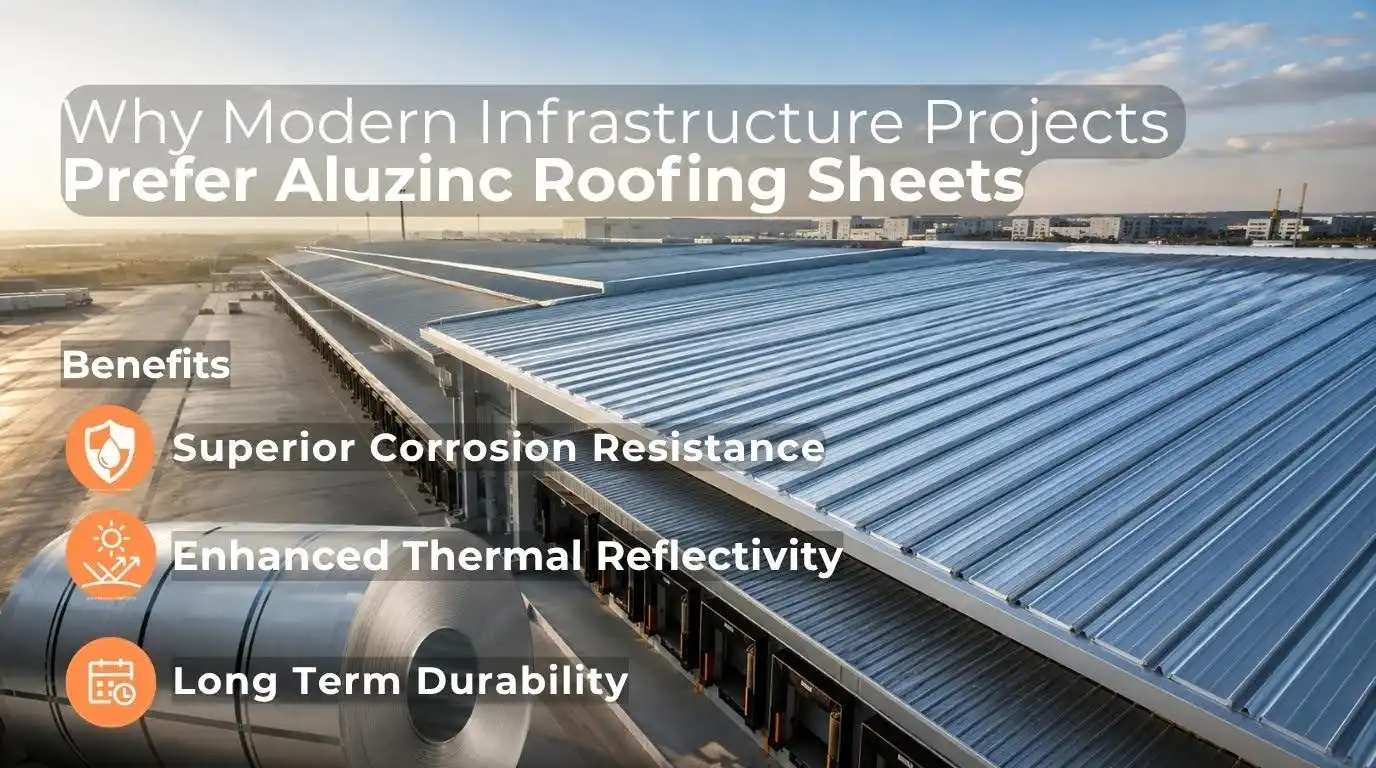
Prolonged exposure to moisture significantly increases the risk of corrosion in monsoon environments. Roofing sheets that incorporate advanced coatings like Galvalume or Al-Zn alloy layers provide a strong protective barrier against rust and oxidation. These coatings prevent water and oxygen from interacting with the base metal.
Corrosion resistance is not simply an added benefit but a fundamental requirement. Materials that resist corrosion effectively reduce the frequency of maintenance and ensure consistent performance. -
Efficient Water Drainage Design
An effective roofing system must allow rainwater to flow off the surface quickly and efficiently. Roofing sheets with well-designed profiles like corrugated or trapezoidal patterns are particularly suitable for this purpose. These corrugated profiles guide water away from the surface which prevents accumulation and reduces the likelihood of leakage or structural stress. Efficient drainage is therefore a key factor in maintaining the durability of roofing systems in monsoon-prone areas.
-
Strong Wind and Impact Resistance
Monsoon weather often involves strong winds in addition to heavy rainfall which places additional stress on roofing systems. Roofing sheets used in such conditions must be able to withstand wind pressure without bending and lifting or loosening. High tensile strength and secure fastening systems contribute to overall stability.
A reliable high rainfall roofing solution must therefore combine strength with flexibility which ensures that the sheets remain firmly in place during adverse weather conditions.
Best Types of Roofing Sheets for Rainy Climate
Selecting the appropriate material is essential for ensuring long-term durability and protection in regions with frequent or heavy rainfall.
-
Galvalume or Aluzinc Roofing Sheets
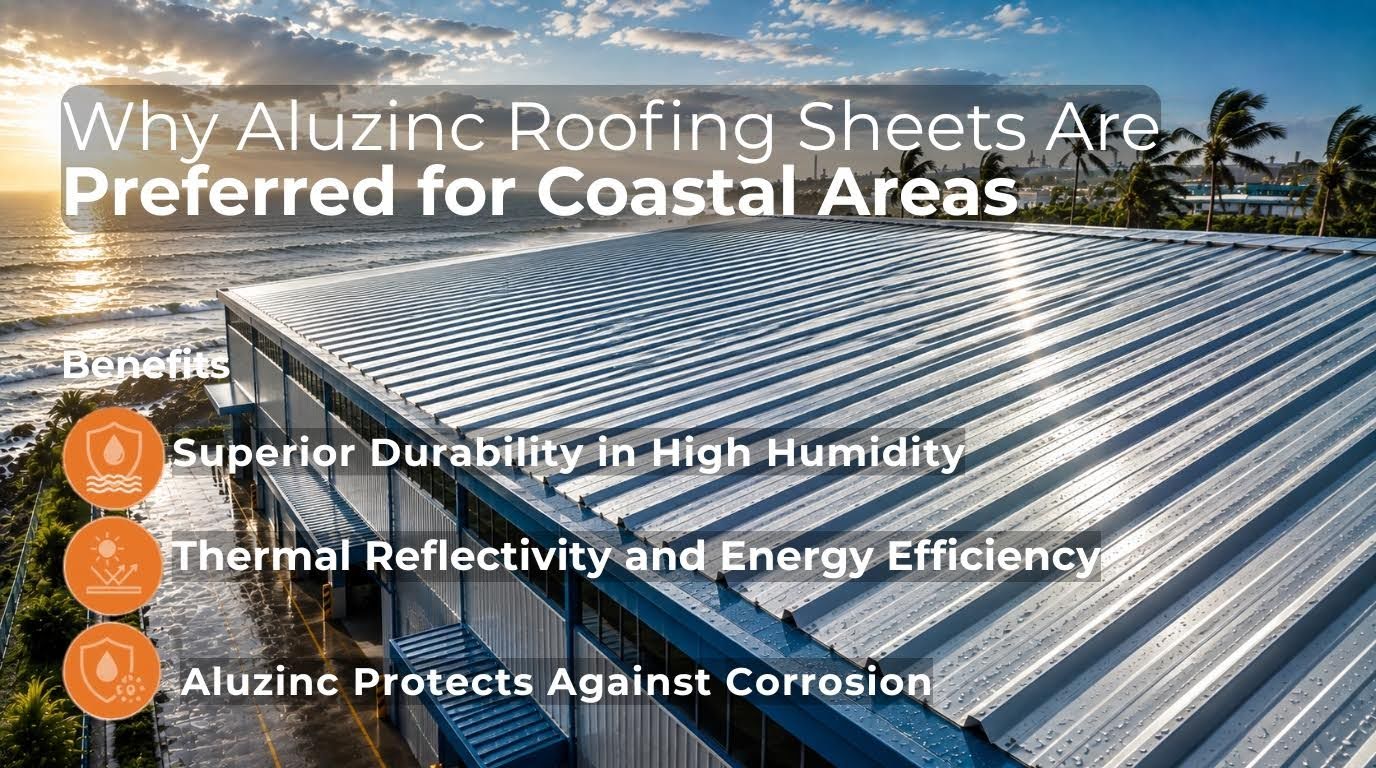
Galvalume or Aluzinc roofing sheets are widely regarded as one of the most dependable types of roofing sheets for rainy climates. Their aluminum-zinc coating provides enhanced resistance to corrosion, making them particularly suitable for environments with constant exposure to moisture.
In addition to durability, these sheets offer heat-reflective properties that help regulate indoor temperature. Learn more about the properties of Al-Zn sheets. -
Colour Coated Roofing Sheets
Colour coated roofing sheets offer a balance between functionality and visual appeal. These roof sheets for the rainy season are designed with advanced paint systems that provide protection against moisture, UV exposure and surface degradation.
Their coating not only enhances durability but also helps maintain colour consistency over time making them suitable for structures. Learn more about the benefits of colour coated sheets.
Preventive Tips to Extend Roof Life in Heavy Rainfall
To maintain the performance of roofing sheets for heavy rainfall, it is important to follow a structured maintenance routine:
- Conduct inspections before and after the monsoon season
- Remove accumulated debris such as leaves and dirt
- Ensure gutters and drainage systems remain clear and functional
- Check fasteners, joints, and edges for any signs of damage
- Apply protective coatings or sealants where necessary
These measures help prevent water accumulation, reduce the risk of corrosion, and extend the overall lifespan of the roofing system.
Conclusion
Choosing the right roofing material plays a vital role in ensuring durability and protection during the monsoon season. The best roofing sheets for monsoon climate are those that offer strong corrosion resistance and efficient water drainage as well as reliable structural performance under challenging conditions. Property owners can achieve long-term performance and reduced repair costs. Investing in a suitable high rainfall roofing solution not only protects the building structure but also enhances overall efficiency, safety, and durability over time.
Written and Verified by:

SEL Tiger
Bio: SEL Tiger Roofing Sheets manufactures roofing sheets using advanced technology for industrial, commercial and domestic requirements. SEL Tiger Roofing Sheets supplies colour coated and Alu-Zinc coated sheets that offer superior strength, weather resistance, corrosion resistance and long-lasting value for every project.